

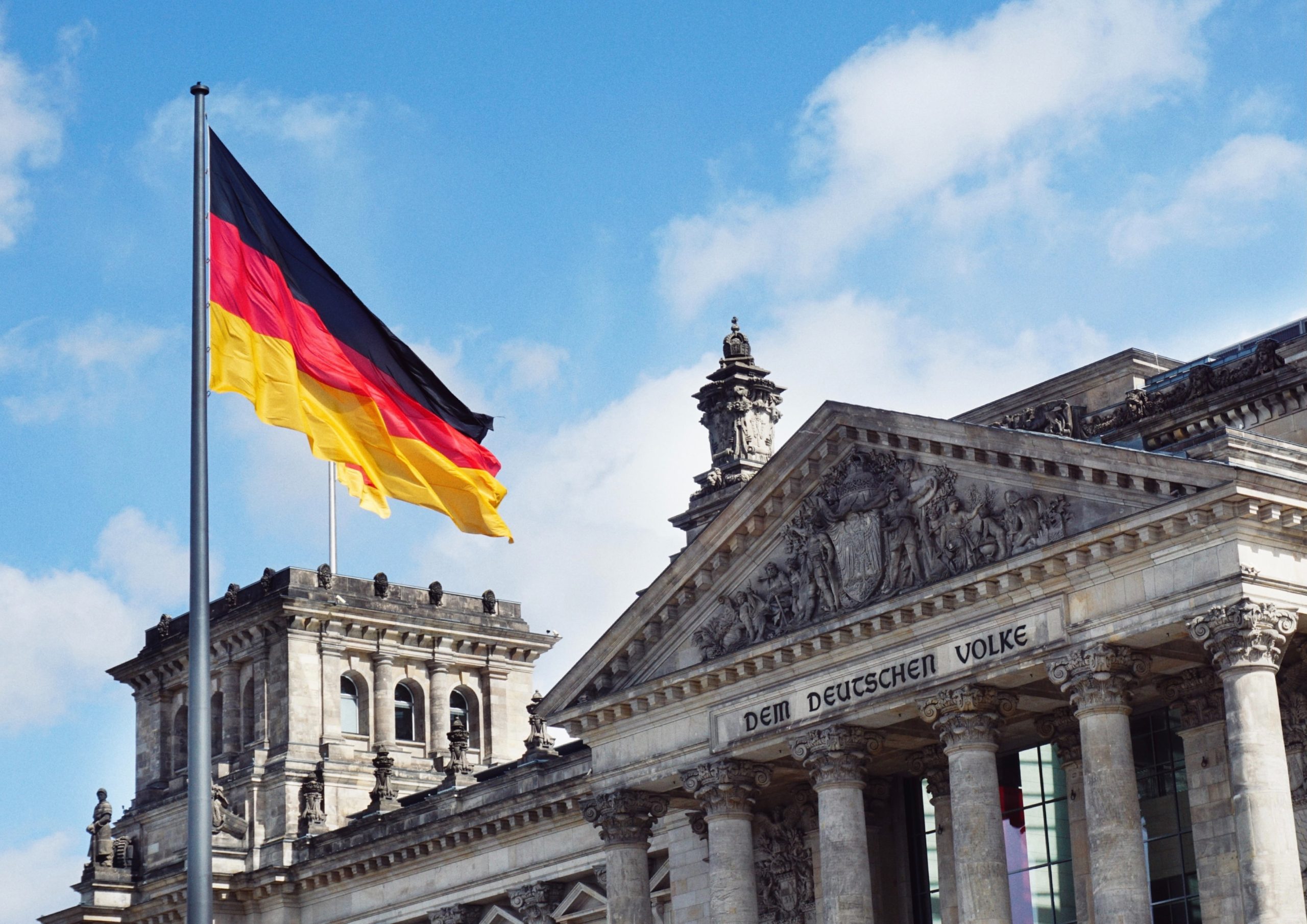
Photo by Maheshkumar Painam on Unsplash
If you are searching for the German job seeker visa from outside the European Union, you are mostly searching for something that no longer exists under that name. On 1 June 2024, the German government quietly retired the old Visum zur Arbeitsplatzsuche for non-graduates and replaced it with the Chancenkarte, also known as the Opportunity Card. The pathway is now points-based, it lasts up to twelve months, and crucially, it lets you work part-time while you hunt. Everything else in this guide flows from that one change.
The shift is not cosmetic. The Federal Employment Agency, the Bundesagentur für Arbeit, reported around 702,000 unfilled positions in January 2026. The Institut für Arbeitsmarkt- und Berufsforschung estimates Germany needs roughly 400,000 net skilled immigrants every year just to hold its economic output steady as the population ages. The Chancenkarte was designed to pull qualified non-EU workers into the country faster than the old paperwork allowed, and the numbers tell you why Berlin had to act.
What the German Job Seeker Visa Actually Is in 2026
The Chancenkarte is a one-year residence permit issued under Section 20a of the German Residence Act, the Aufenthaltsgesetz. It allows a non-EU citizen to enter Germany without a job offer, spend up to twelve months looking for qualified employment, and earn money on the side through part-time work of up to 20 hours per week. You can also take short trial periods, called Probearbeit, of up to two weeks with prospective employers. None of this was possible under the old visa, which forbade paid work outright.
The old German job seeker visa under Section 20 still survives in a narrow form for international graduates of German universities, who can stay for up to 18 months after graduation to look for work. If you studied in Munich, Heidelberg, or Aachen and you want to stay on after your degree, that pathway remains. Everyone else applying from abroad now applies for the Chancenkarte.
You should also know what the Chancenkarte is not. It is not a work visa. It is not an EU Blue Card. It does not grant family reunification rights up front. It does not give you access to unemployment benefits if you do not find a job. It is a runway, not a destination, and the runway runs out in twelve months.
Who Qualifies for the Chancenkarte
There are two routes in. You can qualify automatically as a recognised skilled worker, or you can qualify by scoring points.
Route 1: Full recognition of your qualification
If your foreign degree or vocational qualification is already considered equivalent to a German one, you are in. Equivalence is checked through the Anabin database, run by the Central Office for Foreign Education, and through formal assessments by the Zentralstelle für ausländisches Bildungswesen (ZAB), which issues a Statement of Comparability for Foreign Higher Education Qualifications. A software engineer from Bangalore with a recognised B.Tech, an accountant from Lagos with a chartered designation that maps to a German qualification, a registered nurse from Manila with credentials assessed under Germany’s Anerkennungsgesetz — all qualify without needing the points calculator at all.
Route 2: The six-point system
If your qualification is not fully recognised, the door is still open. You need a minimum of six points across five categories laid out in the Skilled Immigration Act:
- Qualifications — up to four points, depending on whether you hold a partially recognised vocational qualification, a higher-education degree from a country with sufficient academic standards, or a degree in a shortage occupation
- Professional experience — two or three points for at least two or five years of relevant skilled work
- Language skills — one to three points for German at A1 through B2, or one point for English at B2
- Age — two points if you are under 35, one point if you are between 35 and 40
- Connection to Germany — one point for a previous legal stay of at least six months in the past five years, plus one additional point if your spouse applies jointly and also meets the criteria
A 28-year-old Indian IT specialist with a recognised bachelor’s degree, B2 English, and three years of work hits eight points without needing German at all. A 38-year-old Filipino healthcare professional with vocational training, five years of experience, and A2 German clears the bar comfortably. The official Chancenkarte points self-check on Make-it-in-Germany lets you test your score before paying any fees.
Across both routes, you need a clean criminal record, valid health insurance, and proof that you can support yourself financially without claiming German welfare.
What It Costs and What You Have to Show
The Chancenkarte application fee is €75, paid when you submit at the German embassy or consulate in your country of residence. The fee is not refundable if your application is refused or withdrawn.
The bigger number is the proof of funds. For 2026, the standard livelihood requirement (Lebensunterhalt) sits at €1,091 per month, which works out to €13,092 for the full twelve-month stay. Three options are accepted:
- A blocked bank account (Sperrkonto) holding the full €13,092, with monthly releases of €1,091
- A formal Declaration of Commitment, the Verpflichtungserklärung, signed by a financially solvent German resident who agrees to cover your living costs
- A signed part-time employment contract showing income at or above the monthly threshold
Embassies are increasingly strict about the format. A regular bank statement showing a balance is rarely accepted on its own — you need either a German Sperrkonto confirmation from a regulated provider, or a notarised Verpflichtungserklärung issued by the relevant Ausländerbehörde in Germany.
The Document Checklist You Actually Need
Embassies vary in micro-requirements, but the core file is consistent. You should arrive at your visa appointment with:
- A valid passport, signed, issued within the last ten years, and valid for at least three months beyond your intended stay, with two blank pages
- Two completed copies of the national visa application form, printed with the barcode and signed
- Two recent biometric passport photographs, 35 by 45 mm, no digital retouching
- Your original degree certificate plus transcripts, translated into German or English by a sworn translator if needed
- An Anabin printout showing the recognition status of your degree and awarding institution, or a ZAB Statement of Comparability
- A detailed CV in the German tabellarischer Lebenslauf format
- A cover letter explaining your job-search plan, target sectors, and why Germany
- Proof of financial means (Sperrkonto confirmation, Verpflichtungserklärung, or part-time contract)
- Proof of health insurance covering the full stay, equivalent to Gesetzliche Krankenversicherung standards
- Any prior correspondence with German employers, recruiters, or chambers of commerce — strictly optional, but it helps
Regulated professions — medicine, nursing, teaching, architecture, law, tax advisory — require an additional formal licence (Berufserlaubnis) before you can practise, even after you find a job. The Anerkennung in Deutschland portal lets you check the requirements for your specific profession before you apply.
What You Can Actually Do Once You Arrive
This is where the Chancenkarte breaks new ground. Twenty hours of paid work per week is enough to cover most of your rent in a smaller city — think Leipzig, Dresden, or Nuremberg — and to keep your CV active while you interview. The Probearbeit option, capped at two weeks per employer, gives both sides a real look before signing anything. A logistics planner from São Paulo can spend a fortnight at a Stuttgart automotive supplier. A frontend developer from Cairo can trial at a Berlin startup. If it works, the offer follows. If it does not, you keep searching.
What you cannot do is rely on the Chancenkarte indefinitely. The permit is not renewable. If you reach the twelve-month mark without a qualifying job offer, you must leave Germany. You can apply for the Chancenkarte again from abroad, but the immigration authorities will look at your previous attempt when deciding.
The Real Job-Search Timeline
The official line is that you have twelve months. The honest line is that you have about nine. The first four to six weeks go on registering your address at the Bürgeramt, opening a German bank account, getting your tax ID, enrolling in statutory health insurance, and arranging permanent accommodation. Until you are formally Anmeldung-registered, most employers will not progress you past first-round interviews.
Industries hiring fastest in 2026, according to Federal Employment Agency labour-market data, are IT and software, mechanical and electrical engineering, healthcare and elder care, skilled trades (Handwerk) including electricians and plumbers, logistics, and the green-energy build-out around heat pumps and grid infrastructure. Salaries in these areas have tracked upward with the broader wage adjustment that lifted Germany’s statutory minimum wage to €13.90 per hour from 1 January 2026, with a further rise to €14.60 scheduled for January 2027.
A realistic timeline for a mid-career engineer or IT specialist applying from abroad: one to three months of remote applications and screening before arrival, four to six weeks of administrative setup after landing, two to four months of active interviewing, and one to two months between accepting an offer and switching from the Chancenkarte to a residence permit. That puts most successful applicants at month nine or ten. Those who arrive without German, without a network, and without a clear target sector frequently miss the window.
Converting the Chancenkarte into Long-Term Stay
Finding a job is only the first half. The second half is converting your Chancenkarte into a residence permit that actually lets you work full-time. Two main options exist.
The EU Blue Card is the prize. From 1 January 2026, it requires a minimum gross annual salary of €50,700 for standard occupations and €45,934.20 for shortage occupations, which include IT specialists, engineers, doctors, scientists, mathematicians, and a growing list of qualified Mangelberufe. The Blue Card is processed by your local Ausländerbehörde and brings real benefits: faster permanent residency (21 months with B1 German, 27 months without), easier intra-EU mobility, and immediate family reunification with no German-language requirement for spouses.
The standard work residence permit under Section 18 of the Aufenthaltsgesetz covers everyone whose salary or qualification falls below the Blue Card thresholds. It requires the prospective employer to demonstrate that the role matches your qualifications, and in some cases requires Bundesagentur für Arbeit approval. The protections are weaker than the Blue Card, but the threshold is also lower.
Both conversions happen inside Germany. You do not need to leave the country to switch from a Chancenkarte to a work permit. You book an appointment with your local Ausländerbehörde — in Berlin, Munich, Frankfurt, the appointment queue itself can stretch three months, which is why arriving early in your twelve-month window matters.
The Most Common Reasons Applications Get Refused
Embassies refuse Chancenkarte applications for a small set of recurring reasons, and most are fixable.
Insufficient financial proof is the single largest cause. A bank statement showing a lump sum is not the same thing as a Sperrkonto with monthly release confirmation. Qualifications not listed in the Anabin database get rejected when applicants assume the ZAB Statement of Comparability is optional — it is not, for unrecognised degrees, it is essential. Language certificates from non-accredited providers fail the points-system check; only Goethe-Institut, telc, ÖSD, TestDaF, and equivalent certified providers count. Inconsistencies between your CV, your cover letter, and your supporting documents — different employment dates, mismatched job titles, gaps you did not explain — trigger refusals more often than applicants realise. Finally, applying without health insurance or with travel insurance that does not match the gesetzliche Krankenversicherung standard is a near-automatic denial.
Processing times vary by mission. Standard Chancenkarte applications are decided within four to twelve weeks, though embassies in high-volume countries like India, Nigeria, the Philippines, and Pakistan have run longer through 2025 and into 2026.
Frequently Asked Questions
Is the old German job seeker visa still available?
For non-graduates applying from abroad, no — it was replaced by the Chancenkarte on 1 June 2024. Graduates of German universities can still apply for an 18-month job seeker permit after finishing their studies.
Can I work on the Chancenkarte?
Yes. You can work up to 20 hours per week in any job, and you can do trial work (Probearbeit) of up to two weeks per employer in your target field. You cannot take a full-time skilled job until you convert to a residence permit.
How much does the Chancenkarte cost?
The visa fee is €75. The higher cost is proof of funds: €1,091 per month, or €13,092 for the full year, in 2026.
How long does processing take?
Four to twelve weeks at most embassies, with longer waits at high-volume missions. Book your appointment as early as you can — the appointment slot itself is often the longest delay.
Can my family come with me on the Chancenkarte?
Not directly. Family reunification is only available after you convert to a residence permit or EU Blue Card. A spouse who independently qualifies for a Chancenkarte can apply at the same time and earn you one additional point.
What happens if I don’t find a job in twelve months?
You must leave Germany. The Chancenkarte is non-renewable. You can apply again from abroad, but the authorities will weigh your previous attempt.
Chancenkarte or EU Blue Card — which should I apply for?
The EU Blue Card if you already have a job offer meeting the €50,700 (or €45,934.20 shortage-occupation) salary threshold. The Chancenkarte if you do not yet have an offer and want to job-hunt on the ground.
Do I need German to qualify?
No, you can qualify with English at the B2 level alone. But every recruiter and immigration adviser I have spoken to says the same thing: outside English-first tech roles in Berlin and Munich, German at B1 or above roughly doubles your interview rate.
If you are serious about Germany, book a points self-check on Make-it-in-Germany this week, get your degree assessed in Anabin, and start the Sperrkonto paperwork before your visa appointment. The bureaucracy is real, but it is also navigable — and the labour market on the other side of it is, for once, on your side.


